
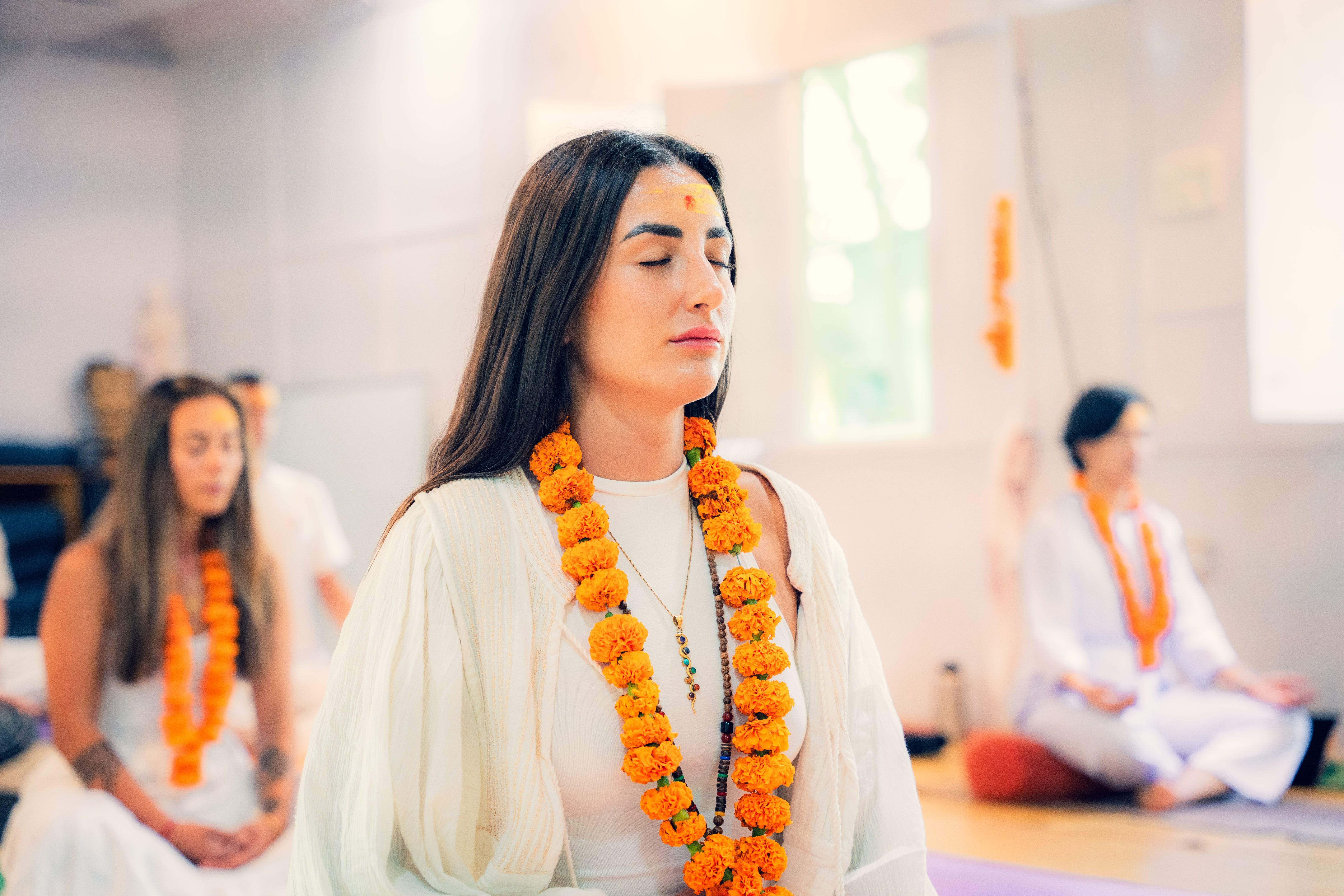
In 2026, generic meditation is out, and hyper-personalized, tech-driven mindfulness is in! Discover how cutting-edge AI and real-time biofeedback devices are revolutionizing stress relief, focus, and sleep. This comprehensive guide helps you compare the best meditation apps, neurofeedback headbands, and integrated wellness platforms to tailor your path to ultimate calm and mental performance, maximizing your investment in personal well-being.
Introduction to the Topic
Welcome to 2026, a world where digital noise often amplifies our internal anxieties, yet simultaneously offers unprecedented tools for inner peace. The quest for calm, focus, and mental resilience has never been more urgent, and the ancient practice of meditation is undergoing its most profound transformation yet. Gone are the days of one-size-fits-all guided meditations; today, we stand at the precipice of an era defined by hyper-personalized, data-driven mindfulness. The fusion of Artificial Intelligence (AI) and biofeedback technology is not just a trend; it's a revolution, promising to make meditation more effective, accessible, and deeply personal than ever before.
At calmnesshub.com, we've been tracking this seismic shift, and the message is clear: the future of meditation is tailored. Imagine a practice that understands your unique stress triggers, adapts to your real-time physiological state, and guides you with precision towards your specific wellness goals. This isn't science fiction; it's the reality of AI-powered meditation apps and biofeedback devices. For those ready to invest in their mental well-being and seeking measurable results, the options are abundant and powerful. Join us as we explore how these innovative solutions are redefining inner peace in the digital age, helping you navigate the market to find the perfect fit for your mind and budget.
Backgrounds & Facts
Meditation, in its myriad forms, has been a cornerstone of human well-being for millennia, revered for its ability to cultivate tranquility, enhance focus, and foster emotional balance. However, traditional approaches often require significant discipline and can feel inaccessible to beginners or those with specific mental health challenges. The digital age brought guided meditation apps, democratizing access but still largely offering a generic experience.
The limitations of this 'broad strokes' approach became increasingly apparent as our understanding of individual neurophysiology and psychological responses deepened. What calms one person might bore another; what helps one focus might distract another. This gap paved the way for the emergence of sophisticated technologies designed to personalize the meditative journey.
The AI Revolution in Mindfulness
By 2026, AI has become adept at analyzing vast datasets, including user-reported moods, sleep patterns, activity levels from wearables, and even contextual data from smart home devices. This allows AI algorithms to curate highly personalized meditation sessions. Instead of a pre-recorded session on 'general stress relief,' an AI might recommend a 7-minute 'focused breathwork for deadline anxiety' session, accompanied by a specific binaural beat soundscape, based on your calendar, recent sleep quality, and reported stress levels from your morning check-in.
Key AI capabilities include:
- Adaptive Content Delivery: AI dynamically adjusts session length, style, and focus based on user progress and real-time needs.
- Personalized Soundscapes: Generating unique audio environments, from ambient nature sounds to complex musical compositions, optimized for individual brainwave entrainment.
- Predictive Wellness Coaching: Anticipating potential stress points and proactively suggesting preventative practices.
The Power of Biofeedback
Complementing AI, biofeedback technology provides a crucial real-time feedback loop, transforming meditation from a subjective experience into a measurable, trainable skill. Biofeedback devices, often worn as headbands, rings, or clips, monitor physiological signals such as:
- Electroencephalography (EEG): Measures brainwave activity (alpha, theta, delta, gamma) to indicate states of relaxation, focus, or agitation.
- Heart Rate Variability (HRV): A key indicator of autonomic nervous system balance, reflecting stress levels and resilience.
- Galvanic Skin Response (GSR): Measures changes in skin conductivity, correlating with emotional arousal and stress.
By providing immediate visual or auditory feedback on these metrics, biofeedback allows users to actively learn to regulate their physiological responses. For instance, an app might show a tranquil scene that brightens as your brain enters an alpha state, or a calming soundscape that intensifies as your HRV improves. This direct insight empowers users to cultivate deeper states of calm and focus more efficiently.
The market for digital wellness solutions, including meditation apps and biofeedback devices, is booming, projected to exceed $200 billion globally by 2027. This growth is fueled by increasing awareness of mental health, rising stress levels in a fast-paced world, and the demand for effective, convenient, and measurable self-care tools.
Expert Opinion / Analysis
The convergence of AI and biofeedback is not merely an incremental upgrade; it's a paradigm shift in how we approach mental wellness. "We're moving from passive consumption to active, data-informed mastery," states Dr. Anya Sharma, CEO of NeuroCalm Innovations, a leading developer of integrated meditation platforms. "Traditional meditation often felt like throwing a dart in the dark. Now, with real-time biofeedback, it's like having a laser pointer guiding your aim, while AI provides the personalized map to your target state."
Professor Kenji Tanaka, an AI Ethics Researcher at the Institute of Digital Mindfulness, emphasizes the profound implications for accessibility and efficacy. "For individuals struggling with ADHD, chronic anxiety, or even sleep disorders, AI-driven biofeedback meditation offers a level of tailored intervention previously only available in clinical settings. The key is ensuring data privacy and ethical algorithm design, making sure the technology serves human well-being, not just engagement metrics." He highlights the importance of platforms that prioritize user control over their biometric data and offer transparency in how AI tailors their experience.
Our analysis at calmnesshub.com reveals that these technologies make meditation less intimidating and more rewarding. Beginners receive immediate validation and guidance, preventing frustration. Experienced meditators can push their boundaries, exploring nuanced states of consciousness with precision. The ability to track progress through measurable metrics like sustained alpha brainwave states or improved HRV provides tangible evidence of mental training, fostering motivation and adherence—a common challenge in traditional meditation practices.
Furthermore, the integration of these tools into corporate wellness programs is accelerating. Companies are recognizing that investing in employee mental resilience through personalized meditation solutions leads to reduced burnout, increased productivity, and a healthier work culture. This shift signifies a broader acceptance of sophisticated mental wellness technology as a crucial component of holistic health, both individually and organizationally.
💰 Best Options in Comparison (VERY IMPORTANT)
Navigating the burgeoning market of personalized meditation tools can be overwhelming. To help you make an informed decision and maximize your investment in well-being, we've broken down the leading options for 2026, focusing on their unique strengths and target users. Whether you're a beginner seeking gentle guidance or an experienced practitioner aiming for peak mental performance, there's a solution for you.
-
ZenithMind AI: The Hyper-Personalized App Experience
Description: ZenithMind AI is a premium subscription-based app that leverages advanced machine learning to create a truly adaptive meditation journey. It integrates with your existing wearables (smartwatches, sleep trackers) to pull biometric data and combines it with your self-reported mood and calendar to dynamically generate daily meditation sessions. Its "Emotional Resonance Engine" analyzes your voice during optional check-ins to further fine-tune recommendations, offering everything from micro-meditations for immediate stress relief to multi-week programs for deep focus or sleep optimization.
Best For: Busy professionals, tech-savvy individuals who value convenience, comprehensive data integration, and a truly adaptive, hands-off personalized experience. Ideal for those who want an app to "think for them" in optimizing their daily mindfulness practice.
-
NeuroSense Halo: Precision Brainwave Training
Description: The NeuroSense Halo is a sleek, comfortable EEG headband designed for serious meditators and individuals seeking to enhance specific cognitive states. It provides real-time auditory and visual feedback on your brainwave activity, allowing you to actively train your mind to achieve deeper states of relaxation (alpha waves), focus (gamma waves), or restorative sleep (delta/theta waves). Its accompanying app offers guided biofeedback exercises, detailed brainwave analytics, and progress tracking, making the invisible world of your brain tangible and trainable.
Best For: Advanced meditators, individuals with specific goals like improving focus for work, reducing ADHD symptoms, enhancing sleep quality, or exploring deeper meditative states. Requires active engagement but offers unparalleled insight and control over your mental landscape.
-
HeartSync Pro: The HRV Biofeedback Master
Description: HeartSync Pro focuses exclusively on Heart Rate Variability (HRV) biofeedback, using a discreet finger or ear clip sensor. It's designed to train your autonomic nervous system for improved stress resilience, emotional regulation, and overall physiological balance. The app provides engaging visual exercises (e.g., breath pacers, calming animations) that respond directly to your HRV, teaching you to achieve "coherence" – a state of optimal heart-brain connection. It's particularly effective for managing anxiety, improving emotional stability, and enhancing physical recovery.
Best For: Individuals primarily struggling with stress, anxiety, or emotional dysregulation. Athletes seeking recovery optimization. Those who prefer a simpler, targeted biofeedback approach without the complexity of EEG. Excellent for cultivating immediate calm and building long-term resilience.
-
CalmnessHub+ Elite: The Integrated Wellness Ecosystem
Description: Our very own CalmnessHub+ Elite platform represents the pinnacle of integrated wellness, combining AI-driven personalization with optional biofeedback device integration (compatible with NeuroSense Halo and HeartSync Pro). Beyond meditation, it offers AI-powered cognitive behavioral therapy (CBT) exercises, virtual reality (VR) immersive environments, access to certified human mindfulness coaches, and community support groups. It's a holistic ecosystem designed to support every facet of your mental and emotional well-being, adapting to your journey over time.
Best For: Individuals seeking a comprehensive, all-in-one solution for mental wellness, including meditation, therapy, coaching, and community. Those who want the flexibility to integrate advanced biofeedback hardware for a truly immersive and data-rich experience. Ideal for long-term commitment to holistic self-improvement.
To help you choose, here's a comparative table:
| Product/Service | Key Features | Personalization Level | Biofeedback Integration | Price Range (2026 Est.) | Best For |
|---|---|---|---|---|---|
| ZenithMind AI | Adaptive meditations, mood tracking, wearable integration, voice analysis. | High (AI-driven dynamic content) | Via wearable data (indirect) | $19.99/month or $199/year | Convenience, broad personalization, busy users. |
| NeuroSense Halo | EEG brainwave training, real-time feedback, detailed analytics, extensive content library. | Medium (adapts to brain state) | Direct EEG (Headband required) | $349 device + $9.99/month (optional) | Deep dives into brain states, focus, sleep, advanced users. |
| HeartSync Pro | HRV coherence training, stress resilience, emotional regulation, simple interface. | Medium (adapts to HRV) | Direct HRV (Sensor required) | $199 device + $7.99/month (optional) | Stress/anxiety relief, emotional balance, quick calm. |
| CalmnessHub+ Elite | AI coaching, CBT, VR, human coaches, community, integrates biofeedback devices. | High (holistic, multi-faceted) | Optional integration with devices | $39.99/month or $399/year | Comprehensive mental wellness, holistic support, long-term growth. |
Outlook & Trends
The trajectory of personalized AI and biofeedback meditation is one of exponential growth and increasing sophistication. Looking further into the late 2020s and early 2030s, we anticipate several key trends:
-
Hyper-Contextual Adaptation: Meditation systems will integrate even more deeply with our daily lives. Imagine your smart home adjusting lighting, temperature, and ambient sounds to optimize for a spontaneous meditation break, or your car's AI suggesting a calming session during heavy traffic, based on your real-time stress metrics.
-
Predictive Emotional Support: AI won't just react to your current state; it will learn to predict potential emotional challenges based on patterns in your data (e.g., "Based on your sleep, calendar, and recent HRV, you might experience elevated stress tomorrow. Here's a proactive 5-minute resilience practice.")
-
Advanced Therapeutic Applications: The clinical adoption of these technologies will expand significantly. AI-guided neurofeedback and biofeedback will become mainstream tools for managing conditions like chronic pain, PTSD, severe anxiety, and even cognitive decline, often augmenting traditional therapy.
-
Ethical AI and Data Sovereignty: As these systems become more powerful, the focus on ethical AI design, data privacy, and user control will intensify. Companies prioritizing transparency and robust security protocols will earn greater trust and market share.
-
Synergy with Human Coaching: Far from replacing human connection, AI and biofeedback will empower mindfulness coaches and therapists with unprecedented data and insights, allowing for more targeted, effective human-led interventions. The blend of technology and human empathy will be the gold standard.
The future promises a world where mental well-being is not just a reactive measure but an actively cultivated, data-informed, and deeply personal journey, accessible to everyone.
Conclusion
In 2026, the landscape of meditation has evolved dramatically, moving beyond ancient practices to embrace the transformative power of AI and biofeedback. This isn't just about finding a moment of calm; it's about actively training your mind and body for peak performance, resilience, and profound inner peace, all tailored to your unique needs.
Whether you're drawn to the seamless integration of an AI-driven app like ZenithMind AI, the precision brainwave training of NeuroSense Halo, the stress-busting power of HeartSync Pro, or the holistic ecosystem of CalmnessHub+ Elite, the options are more powerful and personalized than ever before. These aren't just gadgets or apps; they are investments in your most valuable asset: your mental and emotional well-being.
The time to embrace this revolution is now. Stop settling for generic solutions and discover how personalized technology can unlock a deeper, more effective path to mindfulness. Your journey to a calmer, more focused, and ultimately more fulfilling you starts here. Explore these cutting-edge solutions and find the perfect partner for your mind.