
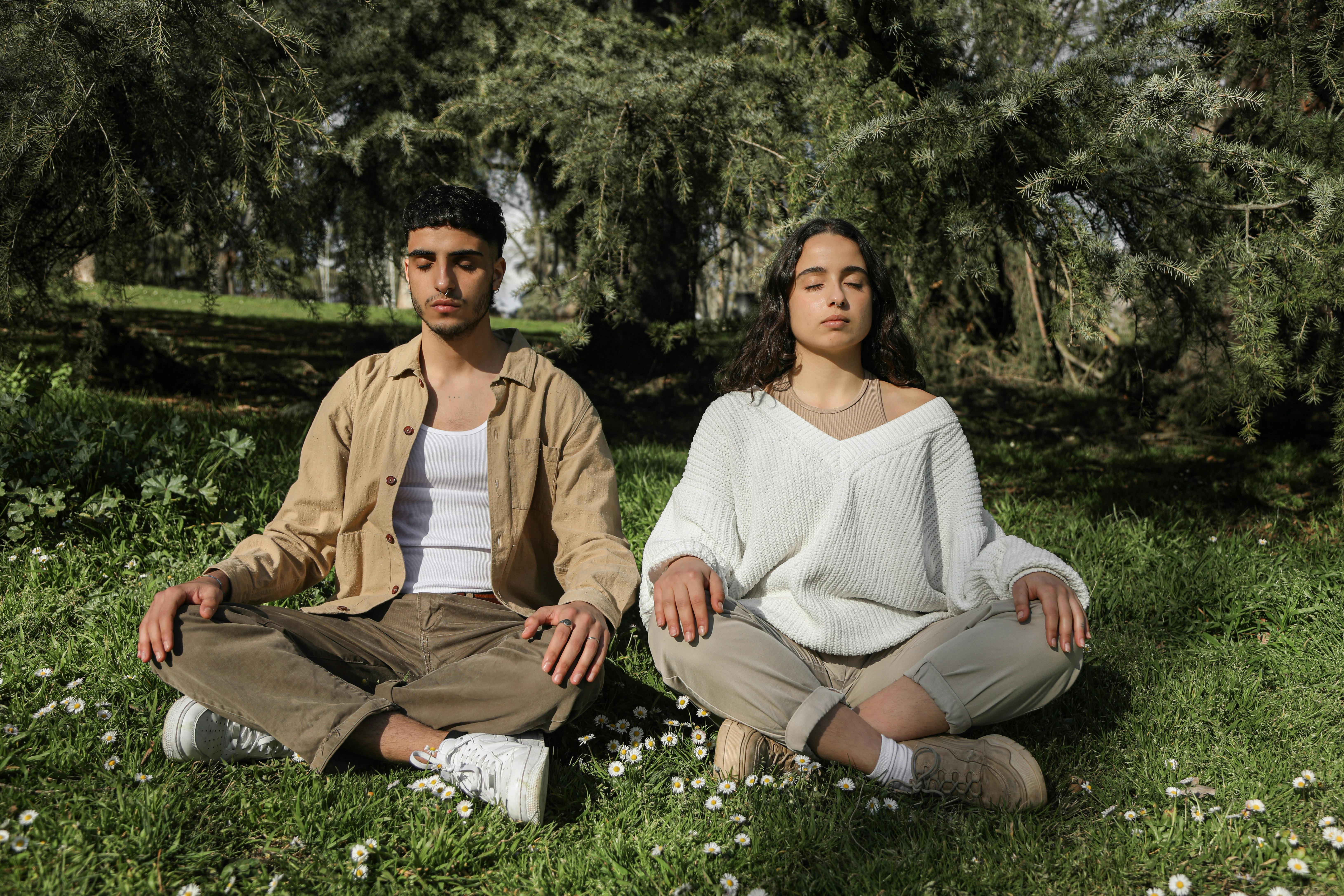
People who practice alone frequently report that sitting with a group is markedly easier. The reasons are structural and social, and none of them require an explanation involving shared energy.
Attendance removes the daily decision
A solo practice requires deciding to sit, every time, against whatever else is available. Each decision is a point at which the practice can be dropped.
A scheduled group replaces that with a single earlier decision to attend, and travel to a location makes the commitment harder to quietly abandon.
This is the same mechanism that makes exercise classes stick better than home routines, and it has nothing to do with what happens once seated.
Stillness becomes socially enforced
Alone, standing up early costs nothing. In a room of seated people, moving is visible, and most people will simply remain still rather than disturb others.
That external constraint keeps someone seated through restlessness they would otherwise escape, which is precisely the period the practice is meant to work through.
The effect is strongest for beginners, who have not yet developed any internal tolerance for the discomfort of the middle portion of a sitting.
Duration is set by someone else
A group session runs to a bell, so the practitioner does not have to judge when enough time has passed. That judgment is itself a distraction.
Solo sitters commonly shorten sessions gradually without noticing, since each individual trim seems reasonable and there is no external record.
Handing the timing to a facilitator removes both the monitoring and the negotiation, which is a substantial portion of what makes group practice feel simpler.
Instruction and correction are available
Most groups include some guidance and a period for questions, which catches misunderstandings that a solitary practitioner may repeat unchallenged for months.
Hearing others describe difficulty also recalibrates expectations, since many people privately assume their wandering attention is unusual.
American practice groups vary widely, from secular sittings at community centers to traditional temple settings, and the amount of instruction differs accordingly.
What the format does not resolve
Group ease can become dependence, where practice happens only on Tuesdays because the supports are external rather than internalized.
Teachers usually address this by assigning home practice explicitly, so the group functions as reinforcement rather than as the entire practice.
Intensive settings can also surface difficult psychological material, and reputable groups screen participants and refer to clinicians rather than treating distress as part of the training.